
CRISPY DUMPLING NIGHT
3 EASY DIPS + 2 COOL DRINKS
Use your frozen dumpling package’s time and preparation method.
Try soy-vinegar sesame, ginger-citrus, or chili-lime.
Serve with a refreshing nonalcoholic sip.
⚠ Check first: Some dumplings contain raw meat or allergens. Package directions take priority.
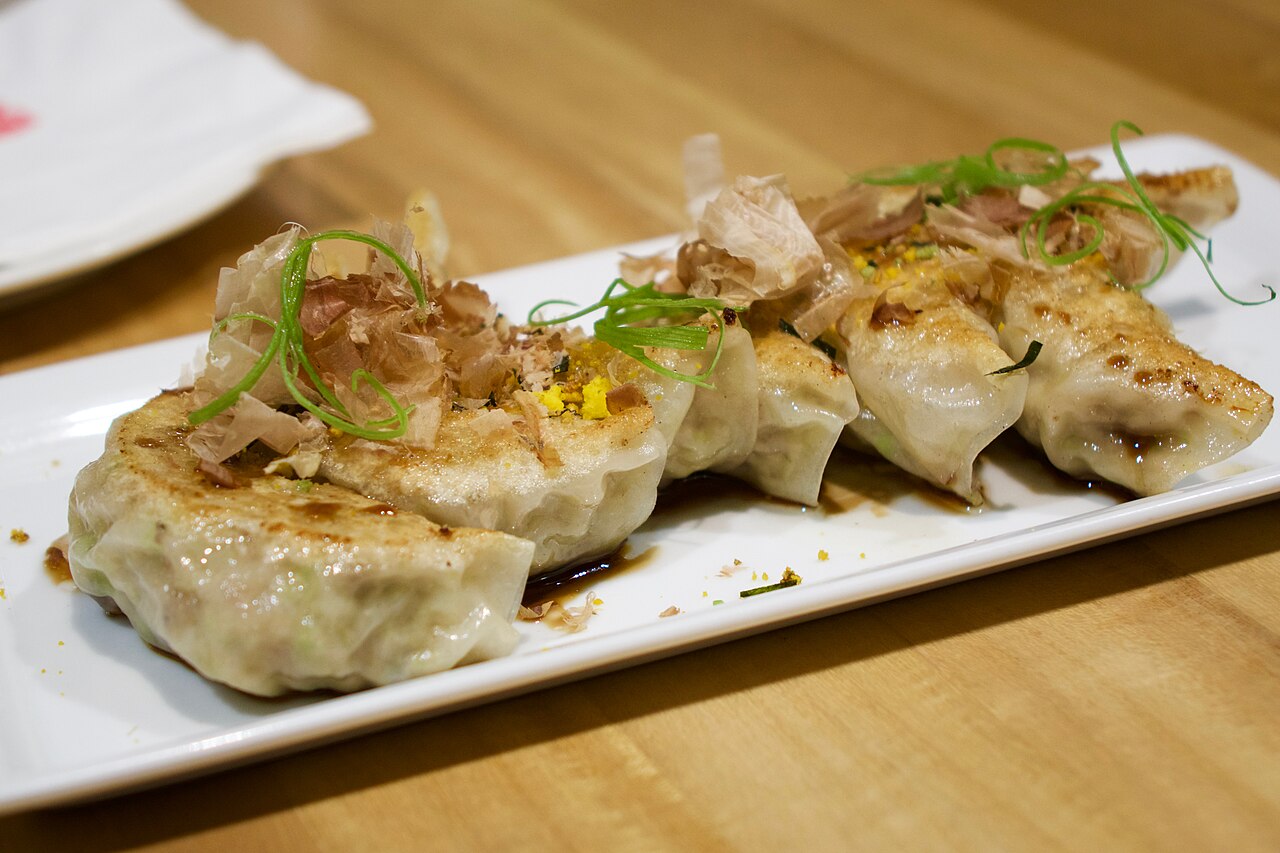
Illustrative photo: Adryan R. Villanueva / Wikimedia Commons, CC BY-SA 4.0. Japanese pan-fried gyoza, not a test of the frozen dumpling brand or package directions described here. Headline text is a separate WordPress overlay.
Frozen dumplings can make an excellent snack-night shortcut—but the sauces turn them into something worth sharing. Instead of claiming one brand’s cooking time works for every bag, this guide shows a three-bowl dumpling dipping station you can make while the dumplings cook according to their actual packaging. Choose tangy soy-vinegar, mild ginger-citrus, or spicy chili-lime; pair with iced green tea or cucumber sparkling water.
This is a practical mix-and-match serving guide, not a claim that our team has independently cooked or tasted any specific frozen dumpling brand. Dumplings and gyoza vary widely by wrapper, filling, shape, whether pre-cooked, and manufacturer’s instructions.
At a glance
- Servings: 2–4 as an appetizer, depending on dumpling size and package yield
- Hands-on sauce preparation: approximately 8–10 minutes
- Dumpling cooking time: use the package’s validated directions; do not assume a universal 10-minute cook
- Equipment: three small bowls, measuring spoons, saucepan or skillet if directed by the package, food thermometer for meat or poultry fillings
- Best with: unsweetened iced tea or citrus-cucumber fizz
What to buy at the grocery store
- 1 package frozen dumplings (check filling ingredients, cooking state and package directions)
- Low-sodium soy sauce or gluten-free tamari
- Rice vinegar or mild unseasoned rice vinegar
- A small amount of toasted sesame oil, optional
- Fresh ginger or prepared ginger paste
- Fresh lime or lemon
- Optional chili oil or chili flakes
- Green onions for garnish, optional
- Ice, chilled tea and sparkling water
PAN FRIED GYOZA EXAMPLE
FOLLOW YOUR BRAND’S COOKING DIRECTIONS
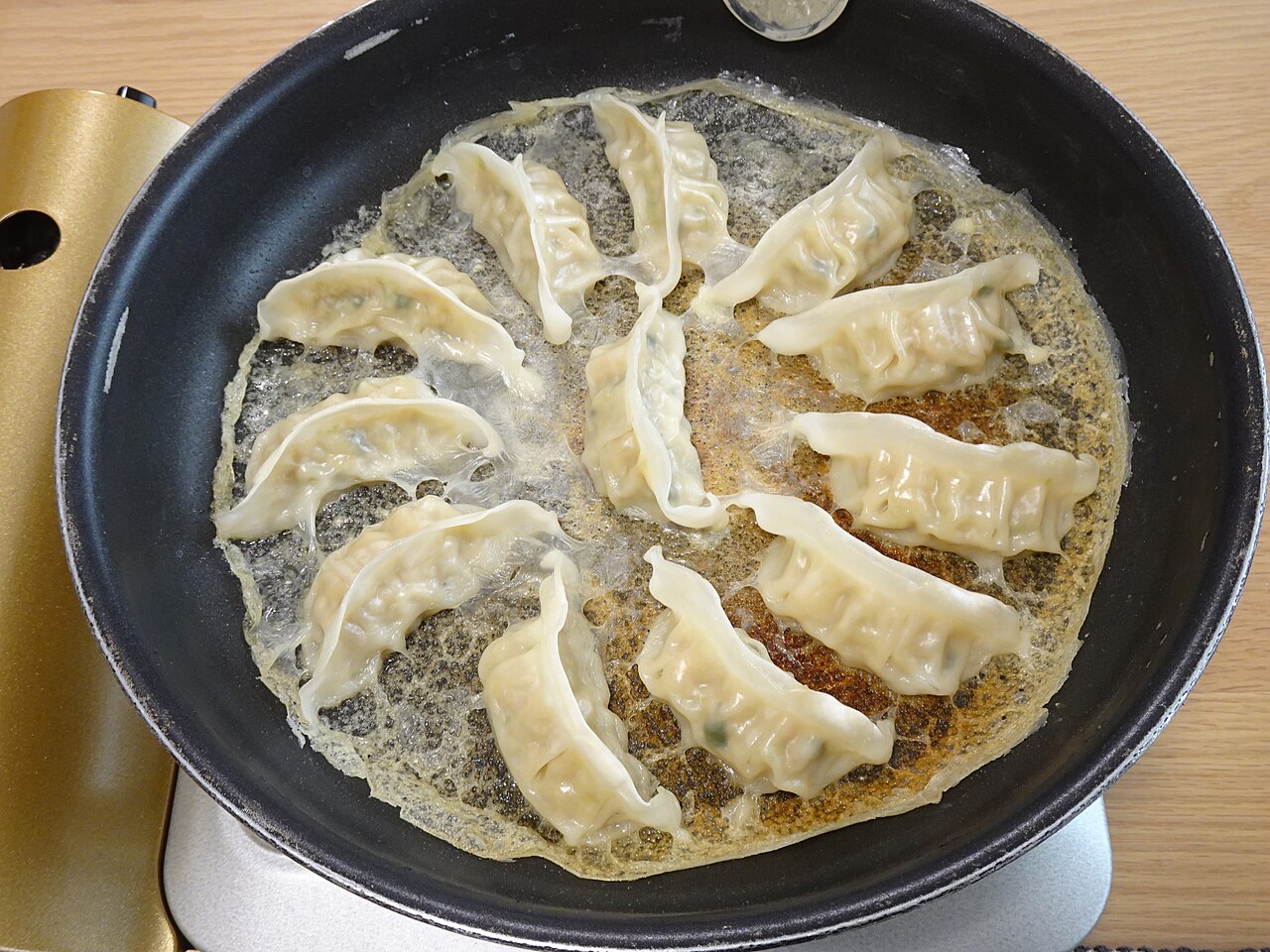
Illustrative photo: RuinDig / Yuki Uchida / Wikimedia Commons, CC BY 4.0. Frying-pan gyoza illustration; not proof a particular package can be cooked this way. Headline text is a separate WordPress overlay.
The simplest, safest dumpling cooking plan
- Read the whole package: identify whether dumplings are fully cooked or contain raw filling. ‘Looks browned’ does not mean the inside is fully cooked.
- Pick the manufacturer’s cooking method: if the bag supports pan-frying with water, follow its specific amount of oil, water, lid time and finish time. If it requires steaming or boiling, use that method instead.
- Cook in batches: avoid overfilling a pan or steamer. Even spacing helps dumplings heat through and reduces stuck wrappers.
- Check doneness: for uncooked dumplings with chicken or turkey filling, use a food thermometer and reach 165°F (74°C). Raw ground beef or pork filling should reach 160°F (71°C). If your product specifies a validated higher target, follow it. Check the thickest dumpling without touching the pan.
- Serve hot: transfer safely cooked dumplings to a plate with three sauces. Use a separate spoon for each sauce and do not return tasting utensils to communal bowls.
For safety guidance, see USDA: Preparing Frozen Food and the safe minimum internal temperatures chart. Frozen items can resemble fully cooked foods even when raw; package cooking directions and a thermometer matter.
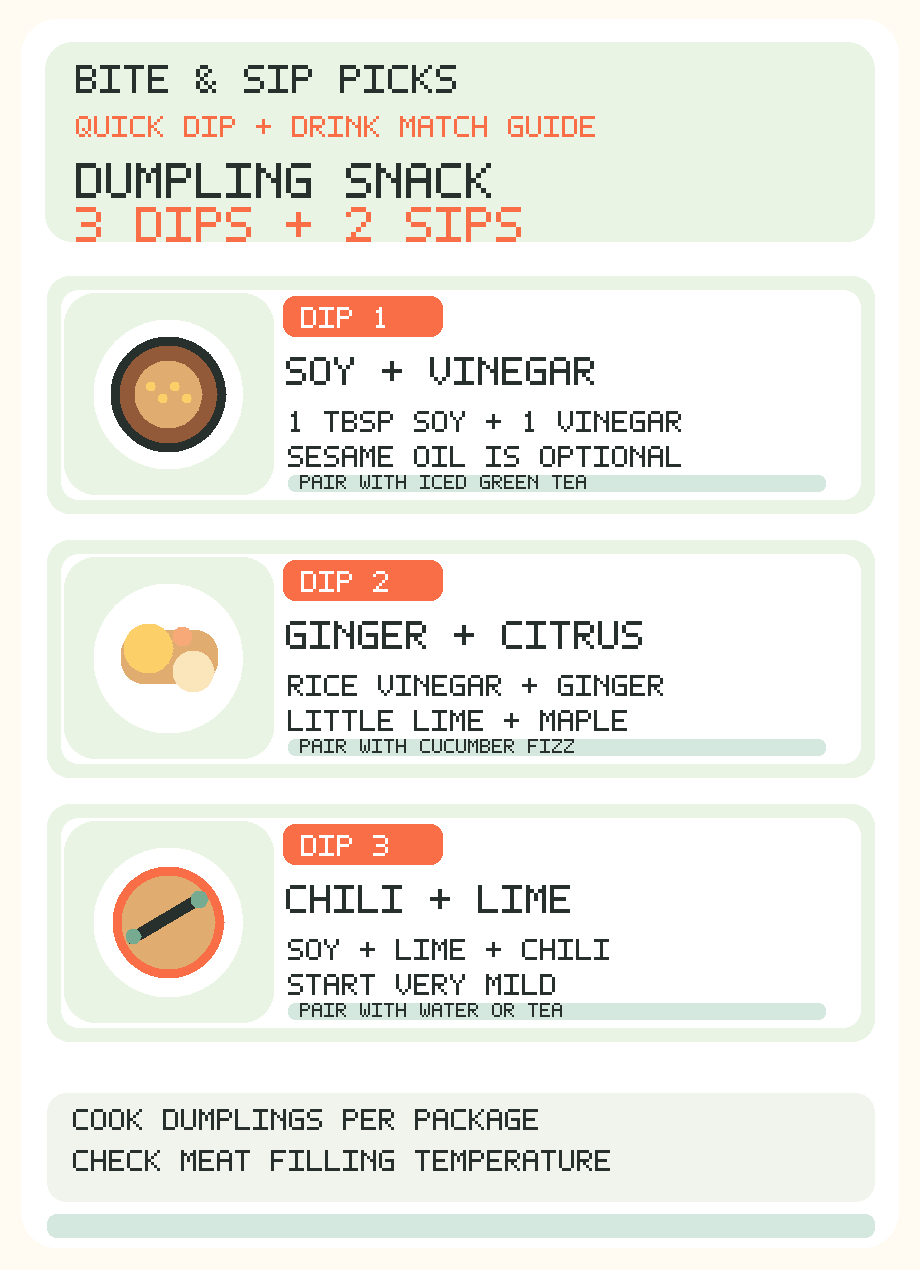
Original Bite & Sip Picks mobile-friendly explanatory infographic. This is a visual recipe and serving guide, not a firsthand cooking test.
Three quick sauces for different moods
1. Tangy soy-vinegar sesame dip
Mix: 1 tablespoon low-sodium soy sauce, 1 tablespoon rice vinegar, 1 teaspoon water and ¼ teaspoon toasted sesame oil. Sprinkle with finely sliced green onion if you like. This is the most traditional-inspired salty-tangy option; it is not a universal sauce representing every Asian dumpling tradition.
2. Mild ginger-citrus dip
Mix: 1 tablespoon rice vinegar, 1 tablespoon water, ½ teaspoon finely grated ginger, ½ teaspoon maple syrup and ½ teaspoon citrus juice. Begin with a small amount of ginger and taste. This option keeps heat low and offers a bright alternative to a soy-heavy sauce.
3. Spicy chili-lime dip
Mix: 1 tablespoon soy sauce or tamari, 1 teaspoon lime juice, 1 teaspoon water and ¼ teaspoon chili oil or a very small pinch of chili flakes. Chili oil brands vary considerably in salt and heat; start small. The sauce should not be a safety risk or a test of spice tolerance.
Pick your dip and your drink
| Your preferred flavor | Choose this dip | No-alcohol drink | Why this might taste good |
|---|---|---|---|
| Tangy and savory | Soy-vinegar sesame | Chilled unsweetened green tea | Tea keeps the match light while the sauce brings acidity |
| Bright and mild | Ginger-citrus | Cold cucumber sparkling water | Fresh cucumber and citrus echo the sauce’s bright notes |
| Spicy with a citrus edge | Chili-lime | Plain iced tea or cold water | A less-sweet drink avoids competing with the chili-lime seasoning |
Two drinks you can assemble in one minute
Unsweetened iced green tea
Prepare green tea according to its package, chill it promptly and pour ¾ cup over ice. Add lemon only if you enjoy citrus. Green tea usually contains caffeine; choose a decaffeinated alternative when needed.
Cucumber-lime sparkling water
Add two washed cucumber slices and a lime wedge to a glass of ice. Top with ¾–1 cup chilled sparkling water. This is a simple serving suggestion, not a claim that carbonated water neutralizes chili heat.
Make the snack bar feel special
- Use three small matching bowls rather than one shared bottle of sauce.
- Label each dip tangy, mild, spicy so guests can choose comfortably.
- Serve extra chili on the side rather than making every dumpling spicy.
- Keep a separate spoon with each dip to reduce cross-contact.
- Pair with sliced cucumbers or a simple green salad; avoid promising an elaborate restaurant-style spread.
Five common problems and practical fixes
- Wrappers tear: do not stir aggressively or lift stuck dumplings before the package’s cooking stage is complete.
- Bottoms are soggy: use only a pan-frying method authorized by the package and finish the crisping step as directed.
- Centers are still cold: do not rely on color; continue cooking and verify doneness.
- One sauce is too salty: dilute in small increments with water, vinegar or citrus and taste with a clean spoon.
- Leftovers lose crispness: refrigerate promptly and reheat properly instead of expecting the original fried texture.
Allergens and smart shopping
Common frozen dumplings may contain wheat, soy, sesame, egg, shellfish, pork or other meat. Sauce components introduce their own allergens. Check all labels for each guest; tamari is not automatically gluten-free unless the specific product states it. Some chili oils also include sesame or peanuts.
Compare the number of dumplings per bag and cost per serving, not just the sticker price. A more expensive bag may contain significantly larger dumplings; the sauces use pantry-size portions rather than another packaged dip.
Storage and disclosure
Refrigerate prepared foods and leftover dumplings promptly, generally within two hours (one hour when temperatures exceed 90°F / 32°C), and reheat leftovers to 165°F when appropriate. See USDA leftovers guidance.
Editorial disclosure: These three sauces are proposed home combinations and were not subjected to an independent tasting panel or laboratory test. Cooking method and doneness must follow the manufacturer and USDA safety recommendations. Photos of gyoza are illustrative rather than a documented test of any frozen brand.
Your next snack-night picks
Want another Korean-inspired bite? Try crispy gochujang tofu or our 10-minute cucumber sesame bites. For a different crunchy appetizer, see pita chips with easy lemon hummus.
Reviewed October 11, 2026. Food-safety guidance is general; actual package instructions take priority.


