
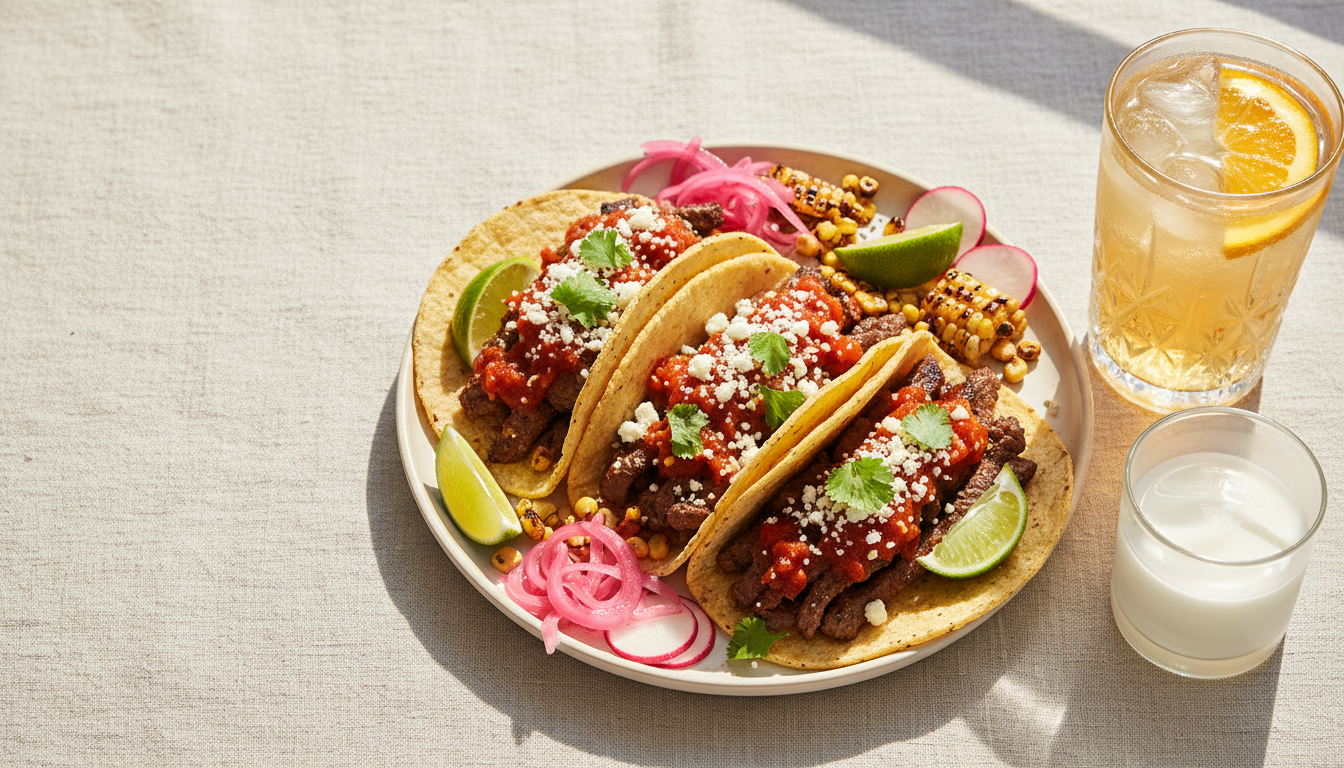
SPICY FOOD, SMARTER PAIRINGS
Flavor • Refreshment • Table Etiquette
Choose a sip after identifying how spicy, salty and rich the dish is.
Milk or a suitable dairy alternative can feel more soothing than water for chili heat.
Try iced tea for savory dishes or citrus drinks for rich fried snacks.
⚠ Check first: Sparkling water is refreshing, but not necessarily effective at reducing chili burn.
Quick answer: For spicy food, begin with an alcohol-free drink you already enjoy. Milk has some research support for easing the mouth’s burning sensation after chili. For flavor pairing, a cool, lightly sweet beverage or refreshing citrus drink can be worth trying—but those are preferences, not guarantees.
Why spicy food changes the drink decision
Chili peppers contain capsaicin, which creates a sensation of heat. That sensation is different from a food simply being served at a high temperature. Alongside heat, pay attention to salt, acidity, sweetness, oil, and texture. These are often what determine whether a drink feels complementary.
It helps to separate two questions: What can reduce the perceived burn? and What tastes good alongside the meal? The first can be studied experimentally; the second is strongly influenced by individual preference.
What research says about the burning sensation
A 2019 study published in Physiology & Behavior tested several common drinks with 72 participants after spicy tomato juice. In that experimental setting, whole milk, skim milk, and a sweetened fruit drink showed some of the largest reductions in reported oral burn. This does not mean every spicy dish or every person will respond in the same way.
In particular, the study used a nonalcoholic beer rather than a typical alcoholic beer, so it should not be used as proof that alcohol reduces capsaicin burn. The evidence also does not establish that one beverage is always best for enjoyment.
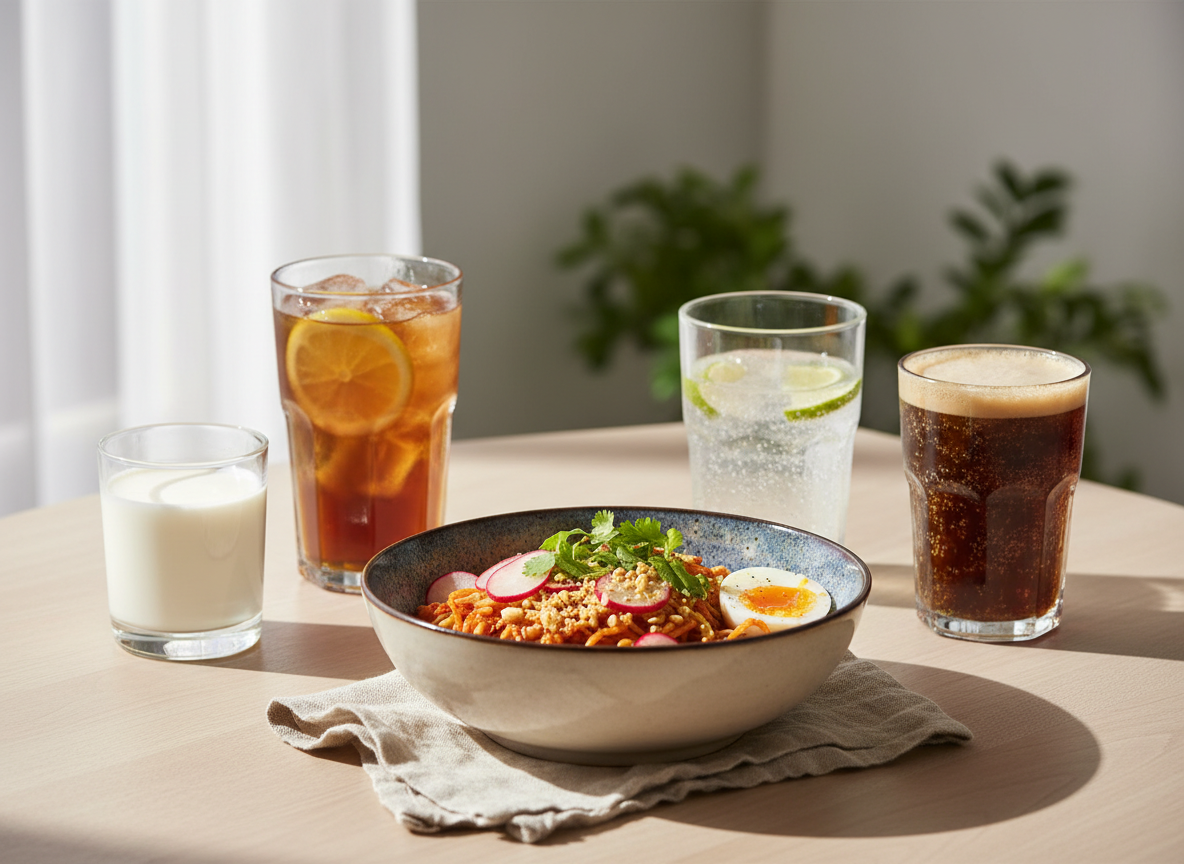
START WITH ALCOHOL-FREE
Milk • Iced Tea • Citrus Water
Illustrative serving ideas; these are not claims that products were taste-tested.
A practical drink comparison
| Drink idea | Why try it? | Keep in mind |
|---|---|---|
| Plain or lightly sweetened milk | Research suggests milk can reduce perceived chili burn after a spicy bite. | Dairy isn’t suitable for everyone; choose a suitable alternative if needed. |
| Lightly sweetened iced tea | Sweetness and a cool serving temperature may make the pairing pleasant. | This is a taste suggestion, not a tested treatment for capsaicin heat. |
| Citrus sparkling water | Bright acidity can make rich foods feel fresher between bites. | Carbonation may feel unpleasant to some people when the dish is very hot. |
| Alcohol-free malt beverage | A malty or slightly sweet flavor may complement savory fried foods. | Check the label if avoiding all alcohol; “nonalcoholic” products may not always mean 0.0% ABV. |
| Optional: a lower-intensity alcoholic pairing | Adults may enjoy an alcoholic beverage for its flavor alongside a meal. | Alcohol is not needed and should not be presented as a remedy for chili heat. |
Pairing ideas for familiar spicy dishes
Spicy tacos or salsa
Start by assessing whether the dish is citrus-forward and fresh or creamy and rich. For a fresh salsa, try cool sparkling water with citrus. For a hotter pepper sauce, a milk-based option may be useful if dairy suits you. Pairing suggestion only; adjust to the dish.
Spicy fried chicken
The crisp coating, salt, fat, and heat all matter. A cool iced tea or an alcohol-free malt beverage can provide a flavorful contrast. If the heat is overwhelming, do not rely on bubbles to solve it; choose a drink and food combination that feels comfortable.
Chili noodles or spicy stir-fry
Think about chili heat plus savory sauce and possible sweetness. Lightly sweetened tea is a simple option. If the dish is served with pickled vegetables, you may prefer a more neutral drink so that the food stays in focus.
What about beer or wine?
For adults of legal drinking age, wine or beer may be part of the surrounding dining culture, but alcohol is never essential to a good pairing. A drink’s sweetness, acidity, intensity, and serving temperature are more useful discussion points than assuming a particular alcoholic category is automatically “best.” People who are driving, avoiding alcohol, or simply not interested can enjoy the same meal with alcohol-free alternatives.
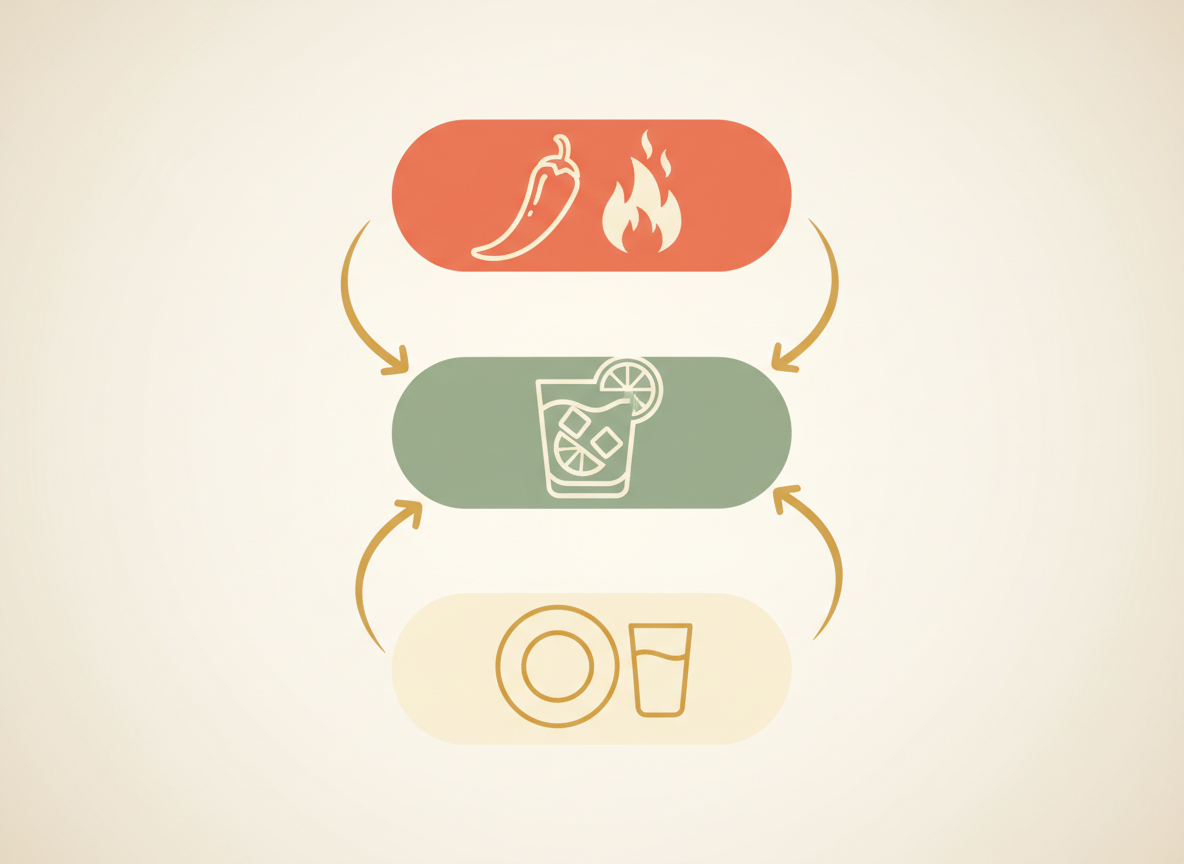
3 WAYS TO CHOOSE
Balance heat, refresh flavors, respect preference
Choose a drink based on heat, texture, and personal preference.
A three-step pairing method you can reuse
- Notice the dominant quality: chili heat, tangy sauce, salty coating, creamy texture, or rich fat.
- Choose a role for the drink: soothe the heat, refresh the palate, or complement a flavor.
- Try a small sip, then adjust: personal preferences differ. If a combination feels unpleasant, change it rather than following a strict rule.
Dining etiquette: let guests choose
When hosting, offer water and at least one appealing alcohol-free choice without making the latter feel like an afterthought. Describe the dish’s likely heat level honestly. Never pressure guests to drink alcohol or ask them to explain why they decline.
For a shared meal, invite guests to choose their own level of spice when practical. Traditions differ across regions and households, so present a pairing as an invitation rather than a rule.
Common questions
Does water make the burn disappear?
Water is fine for hydration, but in the cited study it was not among the drinks with the greatest measured reduction in perceived burn. That result applies to the specific study conditions and should not be treated as a medical instruction.
Are alcohol-free drinks less authentic?
No. A good pairing should meet the preferences and needs of the people at the table. Where historical drinking customs are relevant, explain them as culture rather than a requirement.
Should I always serve something sweet?
Not necessarily. Sweetness may create a pleasant contrast for some dishes and tastes, but it can also overpower delicate food. Begin with the dominant flavors and decide from there.
Sources and editorial note
- Physiology & Behavior (2019): Putting out the fire—efficacy of common beverages in reducing oral burn from capsaicin. A controlled comparison involving 72 participants.
- Google Publisher Restrictions: Alcohol sale or misuse, for our site’s alcohol-related editorial boundaries.
Editorial transparency: This guide is research-based and contains suggested flavor combinations, not first-hand taste testing or a claim of medical benefit. Individual tastes and dietary needs vary. Last editorial review: October 10, 2026.

